CHATEAU DU MIRAL
in Bedoues, Bédouès-Cocurès
-
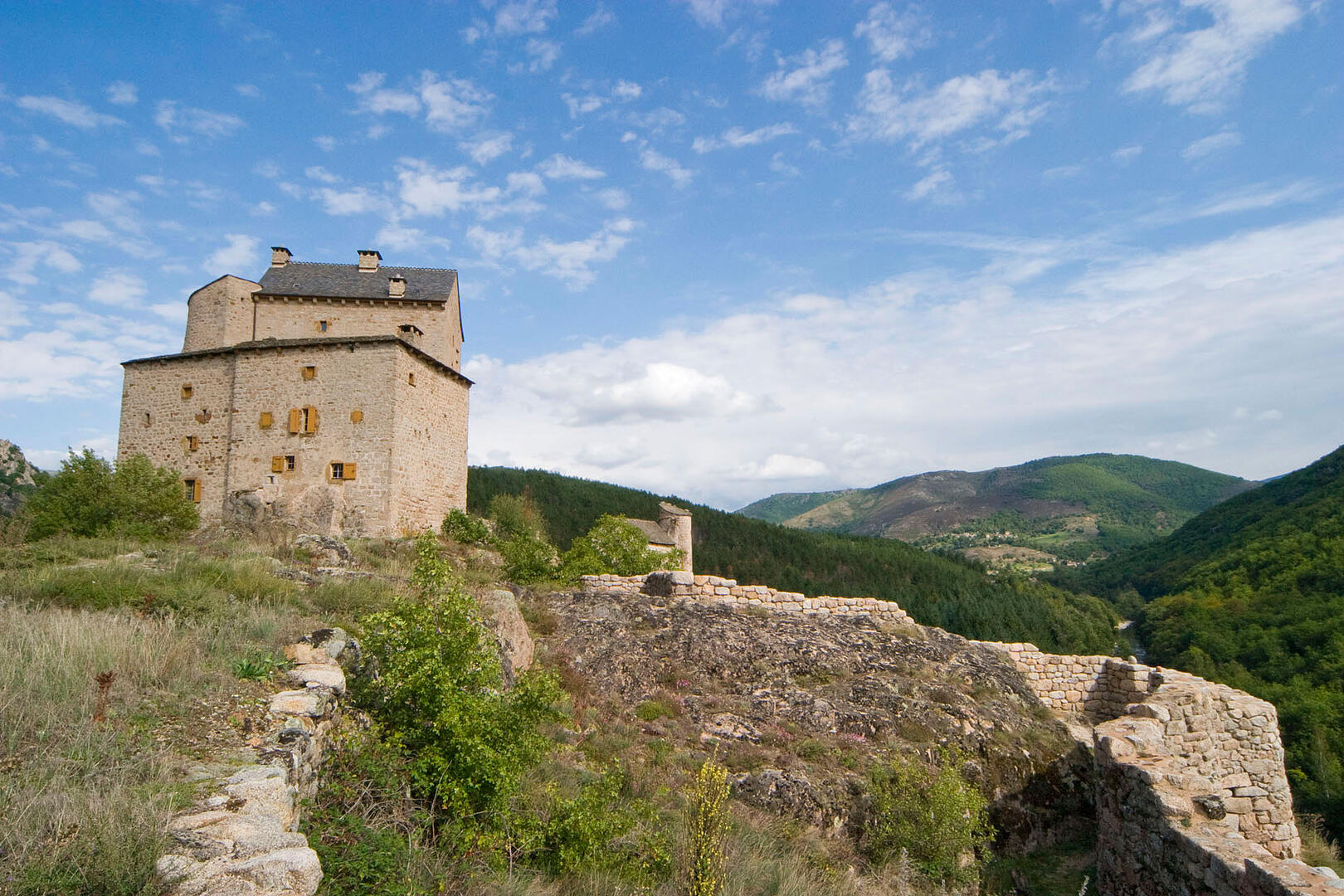
The Château du Miral is located 10 km from Florac on the road towards Pont-de-Montvert. Built of granite, the castle is visible from the D998 road. It overlooks the valley where the Rûnes and Tarn rivers meet. Known since the 13th century, the Château du Miral features a square keep flanked by a round tower. Several buildings are arranged around the main structure. The Gothic building was added to the keep and ramparts around the 15th century. Of note are the 14th-century frescoes in the...
The Château du Miral is located 10 km from Florac on the road towards Pont-de-Montvert. Built of granite, the castle is visible from the D998 road. It overlooks the valley where the Rûnes and Tarn rivers meet. Known since the 13th century, the Château du Miral features a square keep flanked by a round tower. Several buildings are arranged around the main structure. The Gothic building was added to the keep and ramparts around the 15th century. Of note are the 14th-century frescoes in the chapel. In the 14th century, it was the only refuge for the inhabitants of neighboring villages from the English and the mercenary bands who were ransoming the region. In the 17th century, Abbot du Chayla, inspector of missions in the Hautes-Cévennes, stayed there, as it was a Catholic stronghold, before being assassinated by Protestants at Pont-de-Montvert, which triggered the Camisard War. At the time of the French Revolution, due to haphazard successions of owners, the castle gradually fell into ruin until private restoration work began in the early 1980s. This initiative restored this former Catholic stronghold and secured its protection as a historical monument in 1984. Private castle - Visits by appointment only. Duration: 1 hour. Information: +33 6 10 81 83 61 or Pont-de-Montvert Tourist Office: +33 4 66 45 81 94. " Dating back to the 13th century, the castle has been closely linked to the history of the troubles and wars that affected the Gévaudan region for five centuries. The fortified complex includes a vast square keep flanked by a tall round tower on one side, various outbuildings, and defensive works." It expanded significantly after the 16th and 17th centuries when the Malbosc de Miral family progressively enlarged it. The Renaissance period is represented by the mullioned windows of the former manor house, as well as the interior murals (chapel, west wing). This fortified castle is a testament to 13th- and 14th-century military architecture, incorporating a natural defensive site, a double wall, a keep, and a significant local lordship that exploited nearby silver mines. It also retains sculpted and painted decorations, making it one of the few remaining civil buildings in the region . Information enclosed in quotation marks is taken from the Mérimée database.
- See all reviews